Searching for the best blog platform usually means one thing: you want to start a blog the right way. Whether your goal is passive income, brand building, or content marketing, the platform you choose determines how easily you can grow, rank in search engines, and monetize.
This guide compares the most popular blogging platforms based on ease of use, SEO capability, scalability, cost, and control, so you can confidently choose the best option for your needs.
What Makes the Best Blog Platform?
Before comparing options, it’s important to understand the criteria that actually matter:
-
Ease of setup and use
-
Search engine optimization flexibility
-
Ownership and control
-
Monetization options
-
Ability to scale long term
-
Cost over time
Many platforms look good at the beginning but become limiting as traffic grows. The best blog platform supports both beginners and future expansion.
1. WordPress.org
WordPress.org is the most widely used blogging platform in the world and is often considered the best blog platform for serious bloggers.
Why WordPress.org Stands Out
-
Full control over content and data
-
Powerful SEO capabilities
-
Thousands of plugins and themes
-
Supports blogs, websites, courses, and memberships
Ideal For
-
Bloggers who want to grow traffic
-
SEO-driven content strategies
-
Monetization through ads, affiliates, and products
Downsides
-
Requires hosting setup
-
Slight learning curve for beginners
Bottom line: If growth, SEO, and ownership matter, WordPress.org is the best blog platform for long-term success.
2. Wix
Wix is an all-in-one hosted solution designed for simplicity. It’s popular with beginners who want to launch quickly without technical setup.
Strengths
-
Drag-and-drop editor
-
Hosting included
-
Easy for non-technical users
Limitations
-
Limited SEO flexibility
-
Harder to scale content-heavy blogs
-
Platform lock-in
Best for: Hobby bloggers or small personal blogs that don’t plan aggressive growth.
3. Squarespace
Squarespace focuses on visual design and ease of use, making it attractive to creatives.
Strengths
-
High-quality templates
-
Simple publishing experience
-
Built-in hosting and security
Limitations
-
Limited customization
-
Higher monthly cost
-
Less control over SEO and performance
Best for: Creatives who value aesthetics over scalability.
4. Ghost
Ghost is a modern publishing platform built around speed, content, and subscriptions.
Strengths
-
Fast performance
-
Built-in newsletter and membership tools
-
Clean writing experience
Limitations
-
Smaller plugin ecosystem
-
Less flexible than WordPress
-
Requires technical setup if self-hosted
Best for: Writers building paid newsletters or membership-driven blogs.
5. Medium
Medium removes all technical barriers and focuses purely on writing.
Strengths
-
No setup required
-
Built-in audience
-
Clean reading experience
Limitations
-
No control over branding
-
Limited monetization
-
You don’t own your audience
Best for: Writers focused on exposure rather than building a blog business.
6. Blogger
Blogger is Google’s free blogging platform and one of the oldest options available.
Strengths
-
Free hosting
-
Simple setup
-
Google integration
Limitations
-
Outdated features
-
Limited customization
-
Weak scalability
Best for: Casual bloggers with no monetization goals.
7. Webflow
Webflow combines design flexibility with hosting and CMS features.
Strengths
-
Advanced design control
-
Fast performance
-
Clean code output
Limitations
-
Steep learning curve
-
Less content-focused
-
Higher cost
Best for: Designers building visually complex blogs.
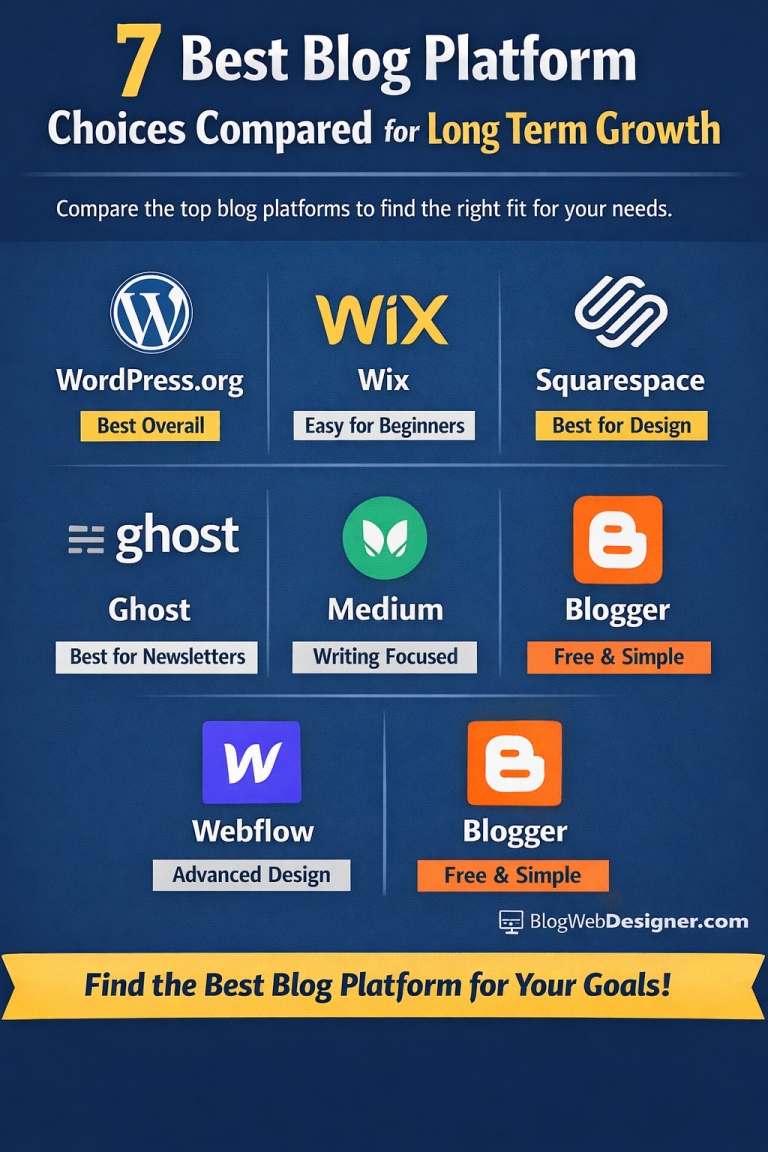
Best Blog Platform Comparison Summary
-
Best overall: WordPress.org
-
Best for beginners: Wix
-
Best for design-focused blogs: Squarespace
-
Best for newsletters: Ghost
-
Best for writing only: Medium
Which Is the Best Blog Platform for Most People?
For anyone serious about blogging—SEO, traffic growth, monetization, or building a digital asset—WordPress.org is the best blog platform. It offers unmatched flexibility, ownership, and long-term scalability.
Other platforms may be easier at the start, but they often require migration later, which can be costly and risky for SEO.
Final Verdict
Choosing the best blog platform is not about what’s easiest today—it’s about what won’t limit you tomorrow. If you want full control, search visibility, and the ability to grow into a business, start with a platform designed for expansion, not convenience.
7 Reasons Best Blog Platform Choices Matter for Growth
Choosing the best blog platform is one of the most important decisions you’ll make when starting or scaling a blog. Your platform affects everything from search visibility to monetization potential, content workflows, and long-term flexibility. Below are seven key reasons why this choice directly influences growth.
1. Search Engine Visibility Starts at the Platform Level
Not all platforms are built with SEO in mind. Clean code, customizable URLs, fast load times, and structured content all influence rankings. The best blog platform makes it easy to optimize metadata, internal links, and site architecture without technical friction.
2. Scalability Determines Long-Term Success
Many blogs fail not because of content quality, but because their platform cannot scale. Traffic spikes, content expansion, and new monetization models require a system that can grow with you. The best blog platform supports performance optimization, modular upgrades, and advanced integrations.
3. Ownership and Control Protect Your Business
Some platforms limit customization, data access, or monetization options. If your blog is a business asset, control matters. The best blog platform allows full ownership of content, email lists, and revenue streams without platform dependency.
4. Content Workflow Impacts Consistency
Efficient publishing tools help maintain momentum. Editorial scheduling, revisions, formatting, and collaboration features reduce friction. A strong platform supports consistent publishing, which directly impacts traffic and audience trust.
5. Monetization Options Expand Revenue Potential
From affiliate links to digital products and memberships, monetization flexibility is critical. The best blog platform integrates easily with payment processors, email marketing tools, and analytics systems to support multiple revenue models.
6. Performance Affects User Experience
Slow sites lose readers. Page speed, mobile responsiveness, and stability are essential for retention. The best blog platform supports performance optimization, caching, and responsive design out of the box.
7. Platform Choice Shapes Future Strategy
Your platform influences what’s possible tomorrow. Whether you plan to add courses, gated content, advanced SEO strategies, or automation, the right foundation reduces future rebuilds. Choosing the best blog platform early prevents costly migrations later.